
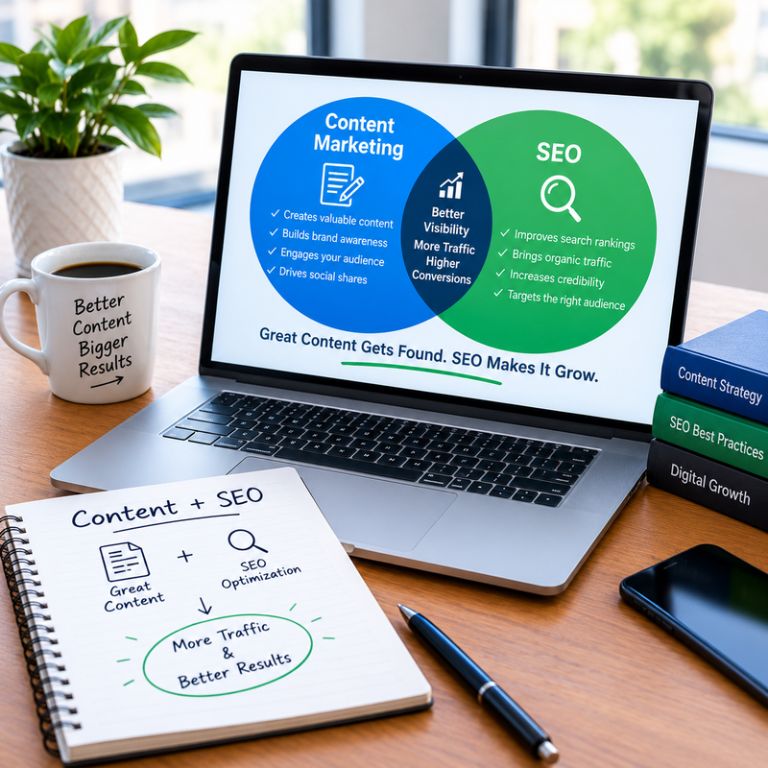
Content marketing SEO is the practice of planning, writing and publishing content that both people and search engines want to find. Content gives search engines something worth ranking. SEO gives content a way to be discovered. When the two run as one system, every article you publish keeps earning traffic, leads and trust long after the launch day.
The stakes are higher than ever. Search results now open with AI Overviews, chat-style answers and zero-click snippets. Brands that treat SEO and content as separate departments are losing visibility. Brands that combine them into a single content marketing SEO plan are the ones getting cited, clicked and remembered.
In this guide, we explain how search content marketing works, how to build a content marketing strategy for SEO, what the latest data says about AI search, and when it makes sense to invest in content marketing SEO services.
What Is SEO Content Marketing?
SEO content marketing means creating content around what your audience actually searches for, then optimizing it so it ranks. It blends two disciplines:
- Content marketing focuses on value: educating, solving problems and building trust with useful articles, guides, videos and tools.
- SEO focuses on discoverability: keywords, technical health, internal links, page speed and authority signals like backlinks.
Content without SEO is a great book hidden in a basement. SEO without content is a signpost pointing at an empty room. SEO content marketing puts the book on the front shelf.
How Search Content Marketing and SEO Work Together
Search content marketing works because each side fixes the other’s weakness. Here are the five places where they connect.
1. Keywords Shape the Content Plan
Keyword research tells you the exact words customers type into Google. Content marketing turns those words into answers. A query like “how much does SEO cost” becomes a pricing guide, not a random blog post. Search intent decides the format: guides for informational queries, comparison pages for commercial queries and service pages for transactional ones.
2. Quality Content Earns Rankings and Backlinks
Google’s ranking systems reward helpful, people-first content. Original research, clear explanations and real examples attract natural backlinks. Those links raise domain authority, which lifts every other page on your site. This is the compounding loop at the heart of content marketing SEO.
3. Technical SEO Gets Content Indexed
Great content cannot rank if Google cannot crawl it. Clean site architecture, fast load times, mobile-friendly layouts, XML sitemaps and schema markup make sure each article is indexed and eligible for rich results. Many sites lose rankings not because of weak writing but because of thin, duplicate or noindexed pages.
4. Internal Linking Builds Topical Authority
Topic clusters group related articles around one pillar page. Internal links between them show search engines that you cover a subject in depth. For example, a pillar page on SEO content marketing can link to cluster posts on keyword research, on-page SEO and content audits.
5. Engagement Signals Close the Loop
When readers stay, scroll and click to another page, it signals that the content satisfied their search. Clear headings, short paragraphs, visuals and strong calls to action improve these signals and turn organic visitors into leads.
Building a Content Marketing Strategy for SEO: 7 Steps
A content marketing strategy for SEO turns scattered blog posts into a growth engine. Follow these seven steps.
- Set business goals first. Decide what content must achieve: leads, sales, sign-ups or brand awareness. Tie each goal to a metric you can track in Google Analytics 4 and Google Search Console.
- Research keywords by intent. Use tools like Google Search Console, Ahrefs or Semrush. Group keywords into informational, commercial and transactional buckets, and prioritize terms with realistic difficulty.
- Map topics into clusters. Build one pillar page per core service and five to ten supporting articles around it. Link every cluster post back to the pillar.
- Audit what you already have. Update, merge or redirect thin and outdated pages before writing new ones. Refreshing an old post is often faster than ranking a new one.
- Create expert, people-first content. Add first-hand experience, original data, screenshots and named authors. Answer the question in the first paragraph, then go deeper.
- Optimize on-page elements. Place the keyword in the title, URL, H1, first 100 words and meta description. Add alt text, schema markup and descriptive internal anchor text.
- Distribute, measure and refresh. Share content on email, LinkedIn and social channels. Review rankings, clicks and conversions monthly, and refresh top pages every 6 to 12 months.
This framework keeps your SEO content marketing focused on revenue, not just traffic.
Trending Now: Content Marketing SEO in the Age of AI Search
The biggest shift in content marketing SEO is that search engines now answer questions directly. Google AI Overviews, AI Mode, ChatGPT search and Perplexity summarize content instead of only listing links. That changes what “ranking” means.
AI Overviews Are Cutting Clicks
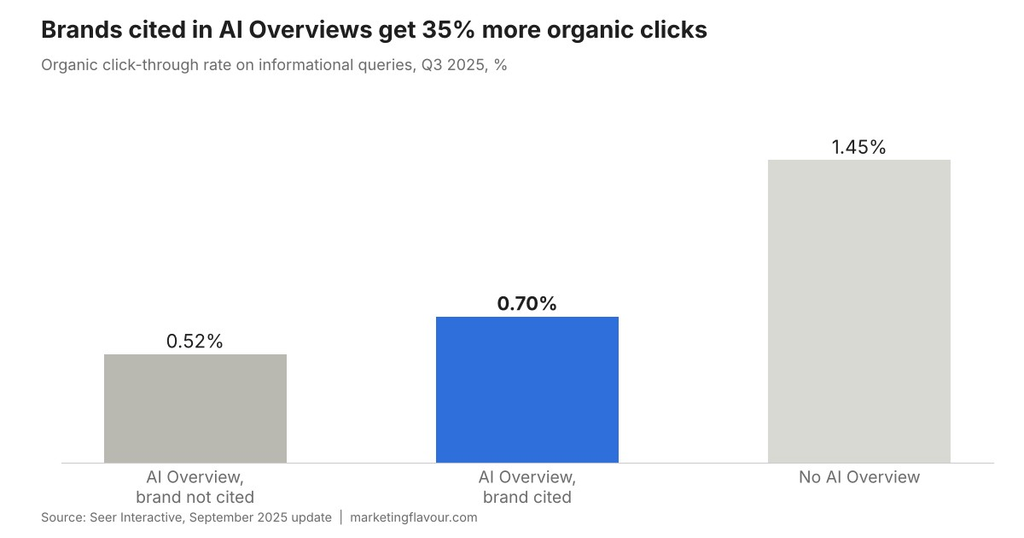
A Seer Interactive study of 3,119 informational queries across 42 organizations found organic click-through rate fell 61% on queries showing an AI Overview between June 2024 and September 2025. Even queries without an AI Overview lost 41% of their CTR. The good news: brands cited inside the AI Overview earned 35% more organic clicks than brands that were not cited.
GEO and AIO Join Traditional SEO
Generative Engine Optimization (GEO) and AI Optimization (AIO) aim to get your content quoted by AI systems. In practice, that means:
- Answering the main question in 40–60 words right under the heading.
- Using clear H2/H3 question headings and FAQ sections.
- Adding original statistics and expert quotes that AI tools can cite.
- Keeping facts fresh, dated and attributed to sources.
- Using structured data so machines understand the page.
E-E-A-T Is the Trust Filter
Google’s quality raters judge Experience, Expertise, Authoritativeness and Trustworthiness. Author bios, case studies, real screenshots and transparent sourcing all strengthen E-E-A-T. In a web filling up with generic AI-written text, proof of real experience is your competitive edge.
Zero-Click Is Not Zero Value
Even when users do not click, being cited builds brand recall. Many buyers later search your brand name directly. Track branded search growth and AI citations alongside traditional rankings.
When to Invest in Content Marketing SEO Services
Not every business has the time or team to run content marketing SEO in-house. Professional content marketing SEO services make sense when:
- You publish content but organic traffic has stayed flat for 6+ months.
- Pages are “crawled – currently not indexed” in Google Search Console.
- Competitors appear in AI Overviews and you do not.
- You lack writers with subject expertise or an SEO specialist to guide them.
- You need a documented content marketing strategy for SEO tied to leads and revenue.
A good agency should offer keyword and competitor research, a content calendar, expert writing, on-page optimization, technical fixes, link earning and transparent monthly reporting. Ask for case studies with real traffic and lead numbers before you sign.
At Marketing Flavour, our SEO services and content writing services work as one team, so every article is researched, written and optimized to rank in both Google and AI search.
Conclusion: One Strategy, Not Two
Content marketing SEO works best when content and search are planned together from day one. Keywords guide what you write. Quality content earns rankings and links. Technical SEO makes sure it gets found. And in 2026, clear, expert, well-structured content is what AI search engines choose to cite.
Start with one pillar topic, build a cluster around it, and measure what moves leads, not just traffic. Ready to grow? Talk to Marketing Flavour about a content marketing strategy for SEO built for your business.
Frequently Asked Questions
What is content marketing SEO?
Content marketing SEO is the combined practice of creating valuable content and optimizing it to rank in search engines. It uses keyword research, search intent and on-page SEO to make sure helpful content reaches the people looking for it.
How is search content marketing different from regular content marketing?
Regular content marketing can be driven by brand stories or social trends. Search content marketing starts with what people actually search for, so every piece targets real demand and can earn organic traffic for years.
What does SEO content marketing include?
SEO content marketing includes keyword research, topic clustering, content writing, on-page optimization, internal linking, schema markup, content refreshes and performance tracking in tools like Google Search Console.
What do content marketing SEO services cost?
Content marketing SEO services usually range from a few hundred dollars a month for small blog packages to several thousand dollars for full strategy, writing and link building. Price depends on content volume, competition and expertise required.
How do I create a content marketing strategy for SEO?
Set clear goals, research keywords by intent, group them into topic clusters, audit existing content, publish expert content, optimize on-page elements, then measure and refresh. A content marketing strategy for SEO should be reviewed every quarter.
How long does content marketing SEO take to show results?
Most sites see early movement in 3 to 6 months and meaningful traffic and leads in 6 to 12 months. Results come faster on sites with existing authority and clean technical SEO.
Does content marketing SEO still work with AI Overviews?
Yes. AI Overviews pull answers from well-structured, trustworthy pages. Content that answers questions clearly, cites sources and shows real expertise is more likely to be cited, and cited brands get more clicks than uncited ones.
References & Sources
- Seer Interactive – AIO Impact on Google CTR: September 2025 Update (source of the chart data)
- Search Engine Land – Google AI Overviews drive 61% drop in organic and paid CTR
- Google Search Central – Creating helpful, reliable, people-first content
- Google Search Central – AI features and your website
- Google – Search Quality Rater Guidelines (E-E-A-T)
- Ahrefs – Search traffic study: 96.55% of content gets no traffic from Google
- Searchlab – Content marketing statistics 2026 (aggregated CMI, HubSpot and BrightEdge figures; verify against originals before quoting)